The Monolithic Skin: Bypassing Portland Cement with Biomimetic Envelopes
The Industrial Flaw: The Concrete and Fiberglass Addiction
The modern construction industry is dangerously addicted to Portland cement and synthetic fiberglass insulation. This addiction is a catastrophic failure of both economics and building science.
Portland cement is highly energy-intensive to produce, expensive, and inherently brittle. It lacks tensile strength, meaning it is mathematically guaranteed to crack under thermal expansion or minor seismic shifts. To fix this, builders stuff the walls with fiberglass—a synthetic sponge that traps moisture, breeds toxic mold, and degrades rapidly. You are essentially paying a premium to build a fragile, suffocating plastic box that requires expensive mechanical dehumidifiers just to keep it from rotting from the inside out.
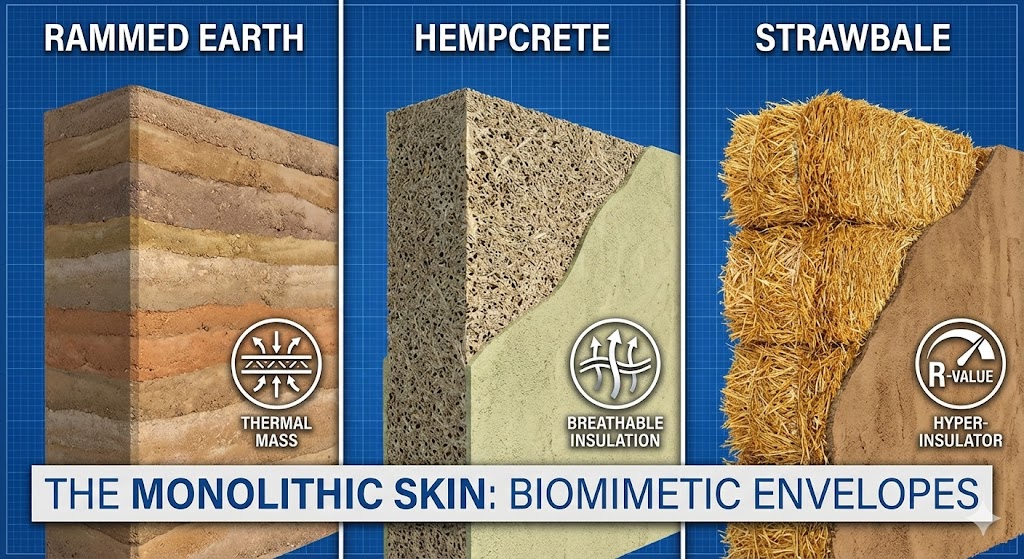
While Maverick Mansions relies on advanced composite geometries for our core institutional-scale projects, we rigorously study and validate alternative architectural methods that share our first-principle thermodynamic goals. To bypass the catastrophic failures of the Portland cement industry, highly effective ecological alternatives utilize three high-performance, organic, “zero-mile” materials: Rammed Earth, Hempcrete, and Strawbale.
1. Rammed Earth: The Kinetic Battery
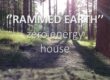
Instead of importing expensive, high-carbon concrete, this method uses the literal dirt excavated from the foundation. Rammed earth is created by aggressively compacting local soil, clay, and gravel into highly dense, monolithic forms.
The Physics (Specific Heat Capacity): Rammed earth possesses extreme thermal mass. It is a perfect structural material to execute thermal flywheel dynamics (such as the Cheetah’s Fridge protocol). The dense earth absorbs ambient daytime heat and slowly releases it at night, regulating a home’s temperature with zero electrical input.
The Economic Arbitrage: The primary building material is sourced directly beneath the site for free. It is structurally dense, fireproof, and acoustically impenetrable.
2. Hempcrete: The Breathing Biocomposite
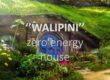
Hempcrete is a biomaterial blend of hemp shiv (the woody core of the plant) mixed with a natural lime binder. It is not used for load-bearing, but rather as an ultimate monolithic insulation envelope.
The Physics (Vapor Permeability & Calcification): Unlike synthetic insulation that traps water, Hempcrete is entirely vapor-permeable. It naturally absorbs and releases humidity, regulating indoor air quality perfectly without the need for mechanical HVAC dehumidification. Furthermore, as the lime binder absorbs CO2 from the atmosphere over time, the wall literally petrifies—turning into limestone and growing structurally stronger every single year.
The Economic Arbitrage: Hempcrete is naturally pest-resistant, mold-proof, and fire-resistant. By eliminating the need for vapor barriers, drywall, synthetic insulation, and mechanical dehumidifiers, builders can drastically reduce upfront Capital Expenditures (CAPEX).
3. Strawbale: The Hyper-Insulator
For extreme climates requiring absolute thermal isolation, highly compacted strawbales coated in breathable natural lime or earthen plasters offer a mathematically superior alternative to fiberglass.
The Physics (Extreme R-Value): An 18-inch thick strawbale wall provides an extraordinary insulation value (R-30 to R-40+), entirely decoupling the interior climate from the external environment. When sealed tightly with lime plaster, the lack of oxygen inside the wall makes it highly fire-resistant—performing significantly better in burn tests than standard timber-frame construction.
The Economic Arbitrage: This method takes a global agricultural waste product (straw) and converts it into a premium, hyper-insulating real estate asset.
The Verdict: Physics Outperforms Industry
To a venture capitalist, developer, or independent builder, the equation is simple: traditional construction requires you to buy expensive, fragile materials that depreciate the second they are installed.
While Maverick Mansions utilizes proprietary, hyper-scalable structural systems for global deployment, we recognize that Rammed Earth, Hempcrete, and Strawbale represent the pinnacle of localized, biological building science. They bypass the global Portland cement cartel entirely, proving that structures built on the absolute laws of physics and biology will always outperform fragile industrial mechanics.